Heather Stapp sees Ness City's↗ET small size in both directions. It lets people know one another and act quickly. It also means fewer people share more responsibilities.
"Our size allows us to know our students, families, and staff really well," Stapp wrote in response to questions from The KSEdTribune. "We can communicate quickly and make decisions based on what our students actually need."
Stapp is leading Ness City after a transition recorded in the Kansas superintendent changes report. She said the district's reputation and the community's hometown feel drew her to the job. Her early priorities are relationships and communication, along with a close look at academics, operations and facilities.
The operating context is compact. Ness City enrolled 277 students in 2025-26, up seven students, or 2.6%, from the year before.
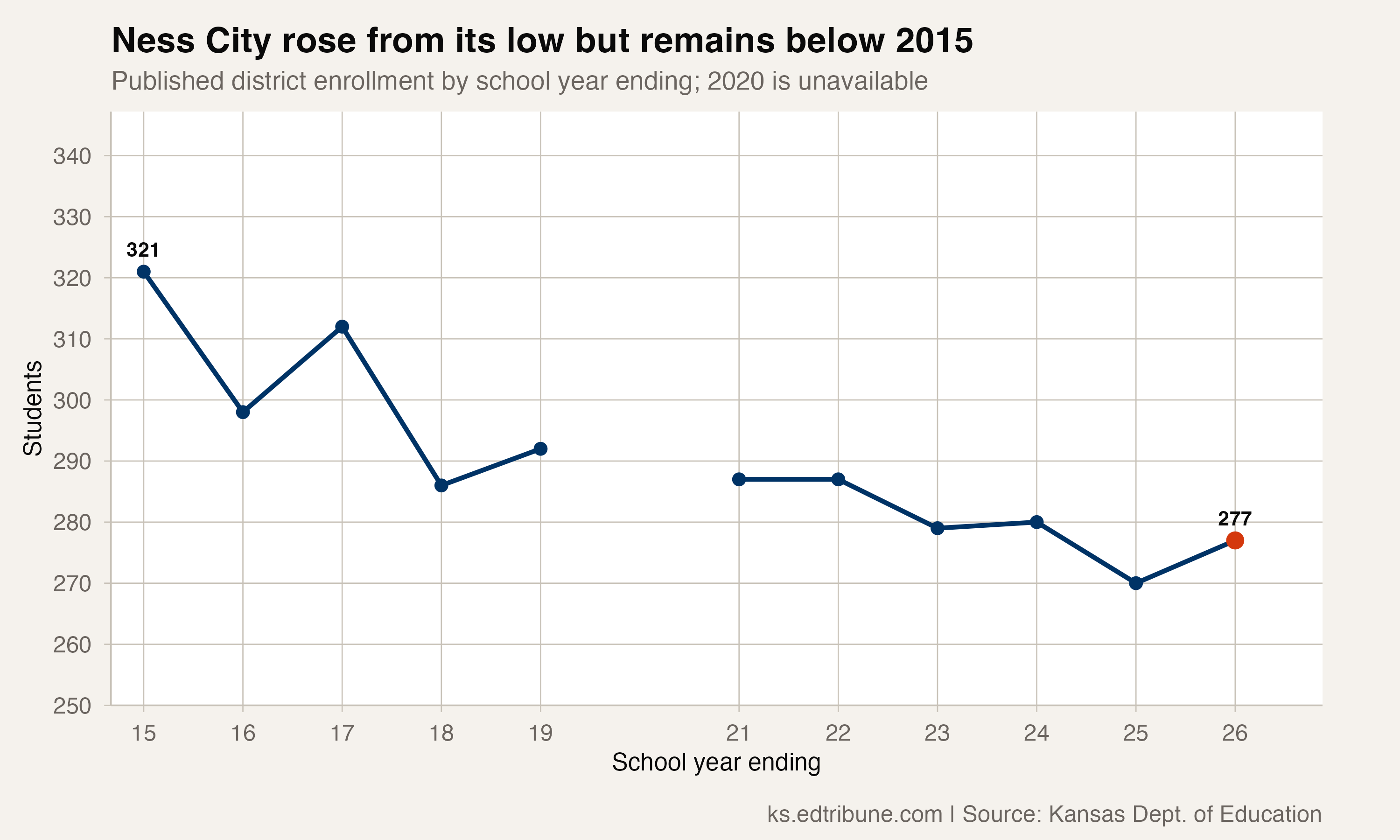
That latest increase does not erase the longer pattern. The district enrolled 321 students in 2014-15. The current count is 44 students lower, a decline of 13.7% across the available endpoints.
The state series has no 2019-20 figure, so the chart breaks the line at that point. No annual movement is calculated across the gap.
Close relationships, overlapping roles
Stapp described herself as a big-picture thinker who is also hands-on. "I lead by example and believe in being part of the work," she wrote.
That approach fits the trade-off she sees in Ness City's size. The district can make decisions quickly because staff know students and families closely, she said. The constraint is capacity: fewer people and resources mean "everyone wears a lot of hats."
Stapp did not present that only as a liability. Shared responsibility can create ownership and stronger teamwork, she wrote.
The enrollment record gives those comments a concrete scale, but it cannot say why the count changed. It also cannot show whether relationships, staffing choices, facilities or any superintendent caused an enrollment movement.
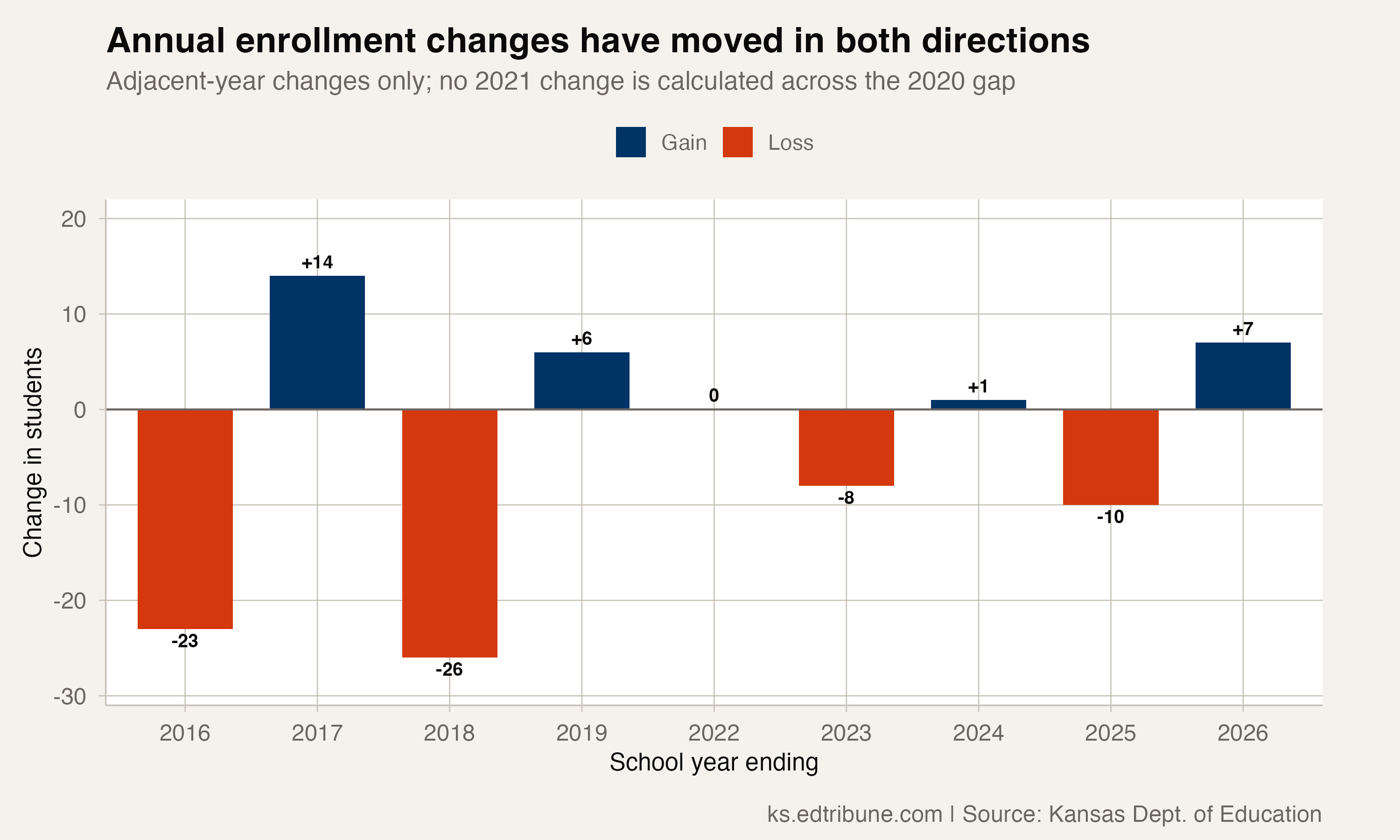
The annual record is uneven. Gains and losses alternate, and the latest increase follows the lowest published count in the series. That makes the rise encouraging without turning it into a forecast.
A pattern shared by nearby-size peers
Ness City's nearest-size comparison districts also ended below their 2015 enrollment. The comparison is based on districts closest to Ness City's current headcount, not geography or a claim that the communities face identical conditions.
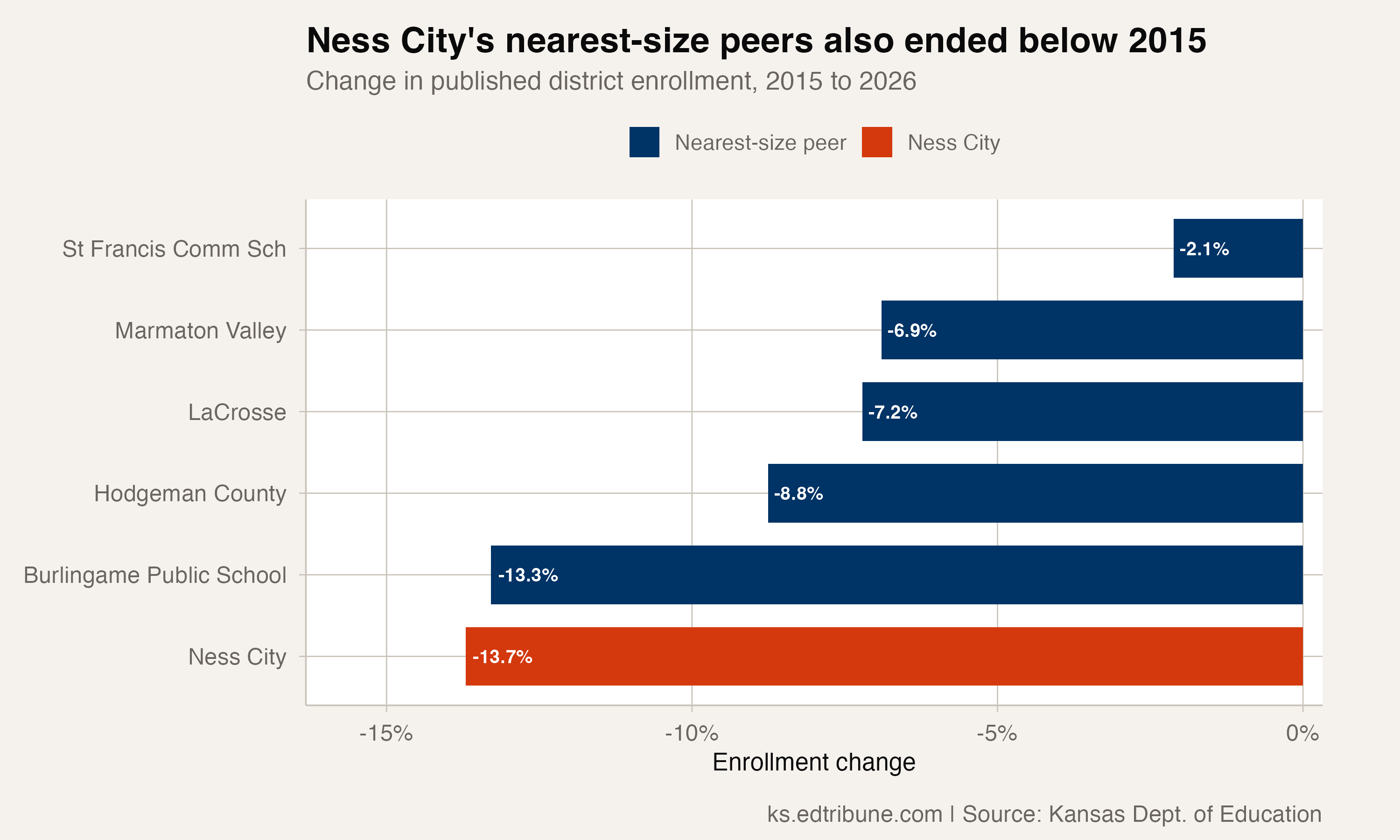
That shared direction is suggestive context, not an explanation. The Kansas State Department of Education's Data Central records how many students districts reported. It does not identify the family, economic or program decisions behind the changes.
For Stapp, the work begins with the relationships the district's size makes possible. Her first priorities do not depend on promising enrollment growth. They depend on communication, participation and making limited capacity serve the students already there.
Enrollment figures come from the Kansas State Department of Education public record. Stapp responded in writing; her quoted comments are from that exchange. After she flagged an earlier building-level figure in EdTribune outreach, the district series was rechecked by stable district identifier before this profile was written.
Detailed code that reproduces the analysis and figures in this article is available exclusively to EdTribune subscribers.
Discussion
Sign in to join the discussion.
Loading comments...