Independence and Osage City ended Kansas's available attendance series below their pre-pandemic chronic absence rates. They were unusual in that comparison, although the records do not show whether the improvement lasted.
The series ends in 2021-22. This is a historical look at recovery against 2018-19, rather than a description of attendance in the current school year.
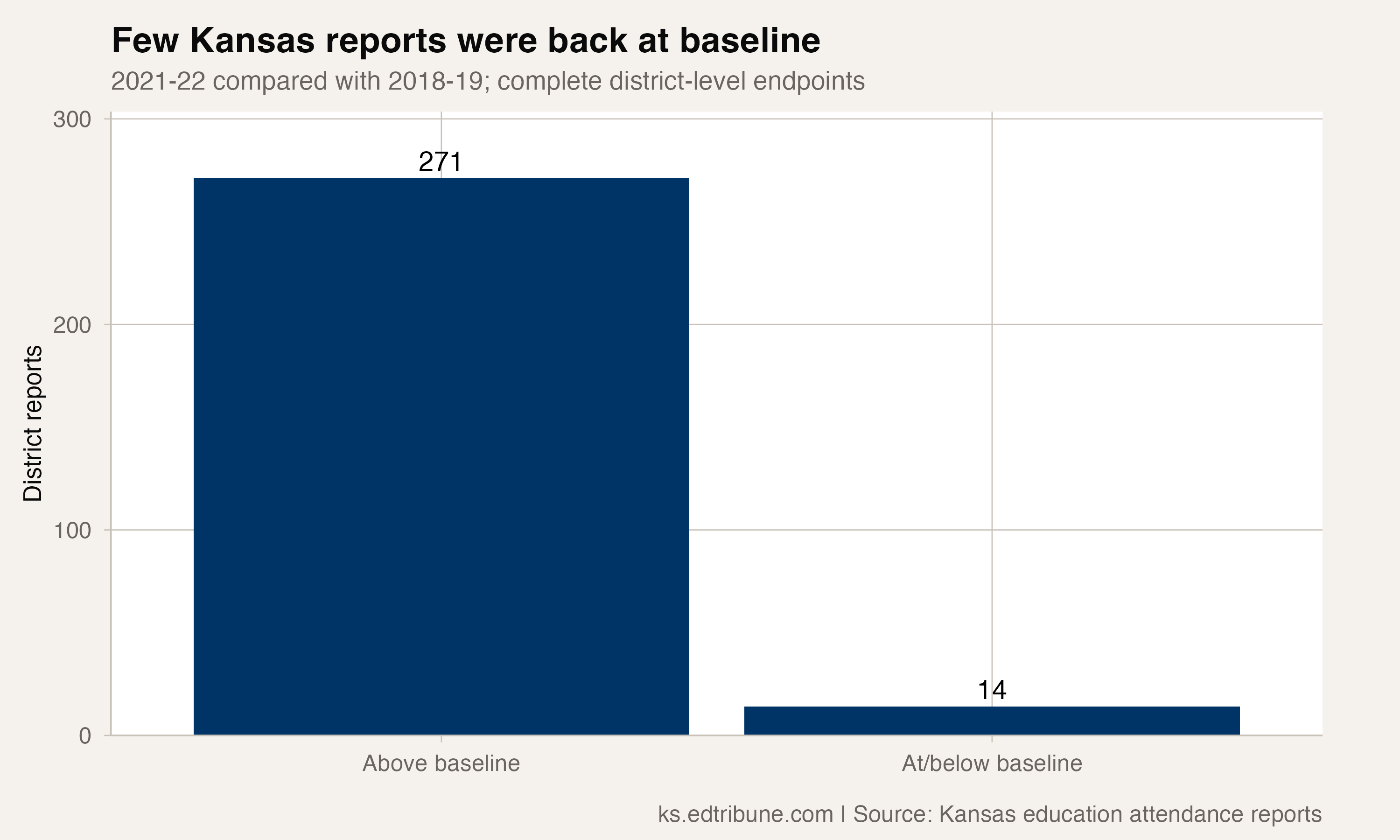
Among 285 districts with comparable rates at both endpoints, 14 were at or below baseline. The other 271 had higher rates. That gives a recovery share of 4.9% of the comparable districts, rather than a share of Kansas students.
The figures come from Kansas's published school attendance reports.
The exceptions in context
Among the recovered districts, Independence and Osage City were the only ones with at least five hundred students in their final-year attendance report. Those published counts were 2,019 in Independence and 691 in Osage City.
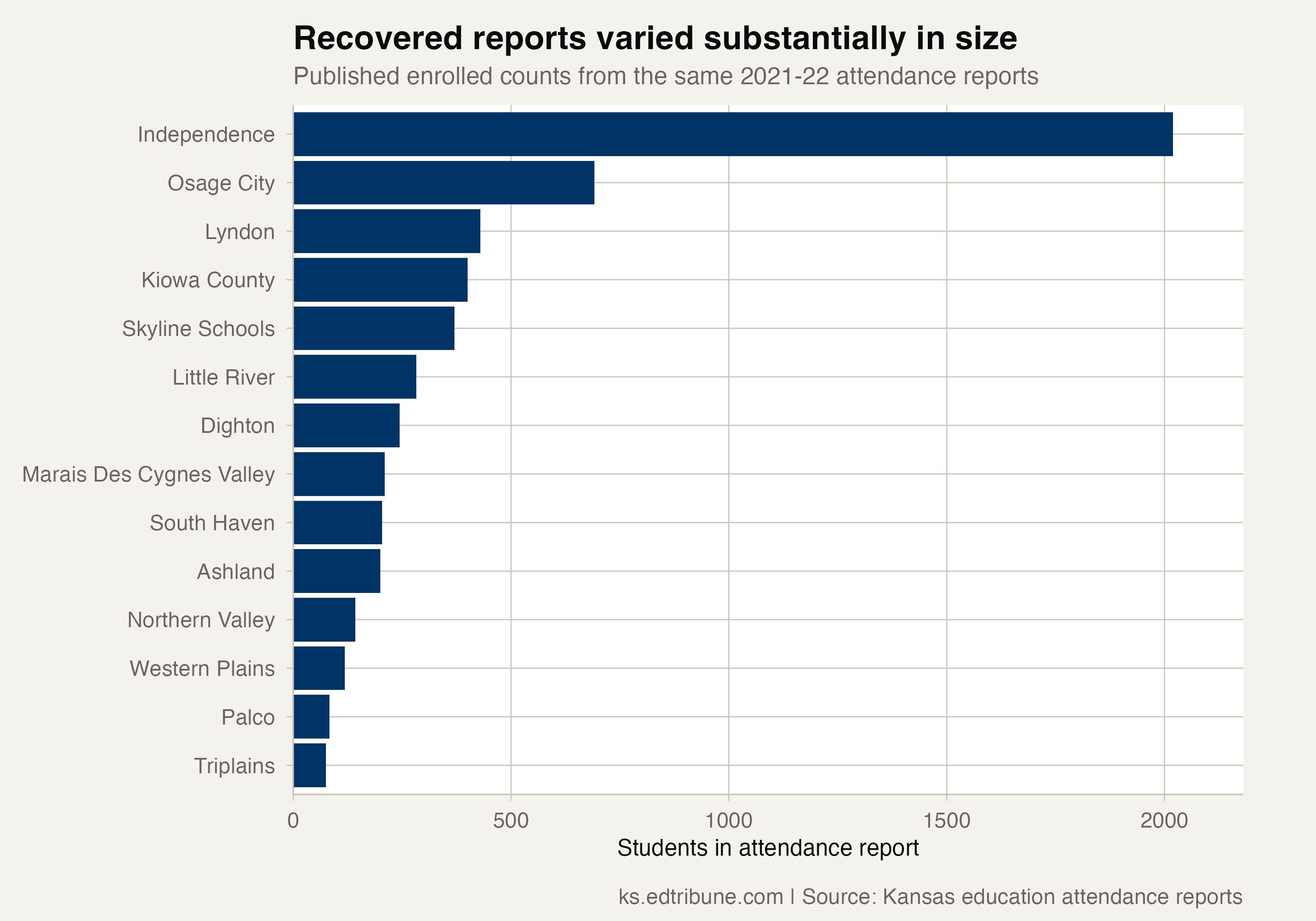
The size distinction identifies the reporting group. It does not establish that the results were durable or that larger districts' rates are immune to changes in the students enrolled.
Independence's decline followed an increase
Independence↗ET had a chronic absence rate of 16.3% at baseline. It rose to 18.4% in 2020-21 before falling to 15.8% in 2021-22. The final rate was modestly below the district's earlier rate.
Kansas's statewide rate, by comparison, rose from 13.9% at baseline to 26.2% at the final endpoint.
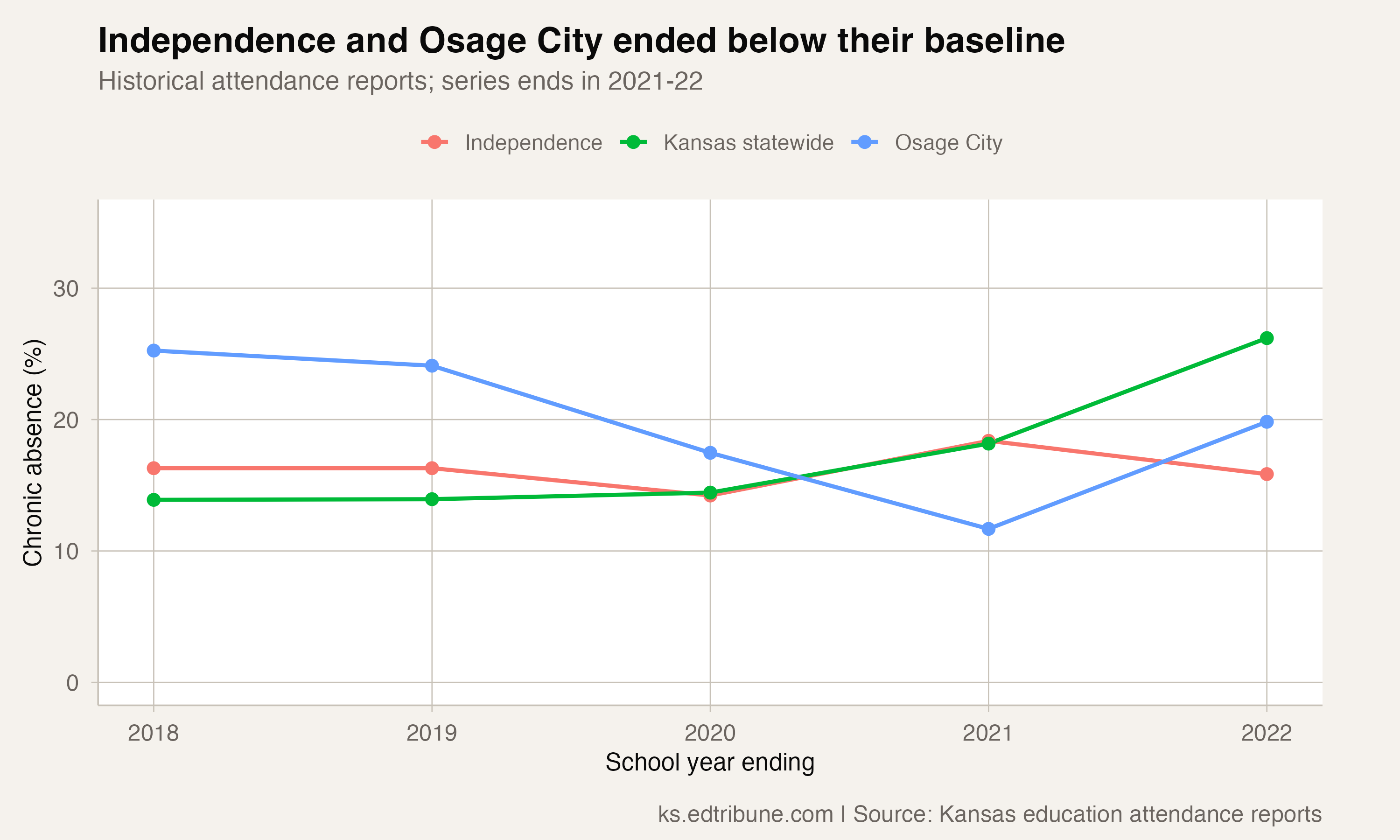
The records therefore support a narrow finding: Independence ended this window below baseline while the statewide rate was higher. They do not identify a particular local intervention as the reason.
Osage City finished below baseline despite a final-year rebound
Osage City had a baseline rate of 24.1%. Its final rate was 19.8%, an improvement of 4.3 percentage points across the endpoints.
But its path was not a steady decline. Its rate had fallen to 11.7% in 2020-21 before rising in the final reporting year. Describing Osage City as continuously recovering would miss that rebound.
This also illustrates the limits of the recovery label. A district can be below its pre-pandemic rate and still have a substantial chronic absence rate, or a worsening latest annual change.
What remains unknown
The statewide comparison makes these districts worth examining. Their endpoint results differ from the much more common increase across the comparable district reports.
The files do not record why the rates changed. They cannot tell whether attendance programmes, student composition, community conditions or reporting practices explain the differences. The historical cutoff also prevents a claim that either district has maintained the result since then.
Independence and Osage City offer documented exceptions within a defined window. Establishing whether their experience provides a useful lesson now requires more recent attendance records and reporting from the districts themselves.
Detailed code that reproduces the analysis and figures in this article is available exclusively to EdTribune subscribers.
Discussion
Sign in to join the discussion.
Loading comments...