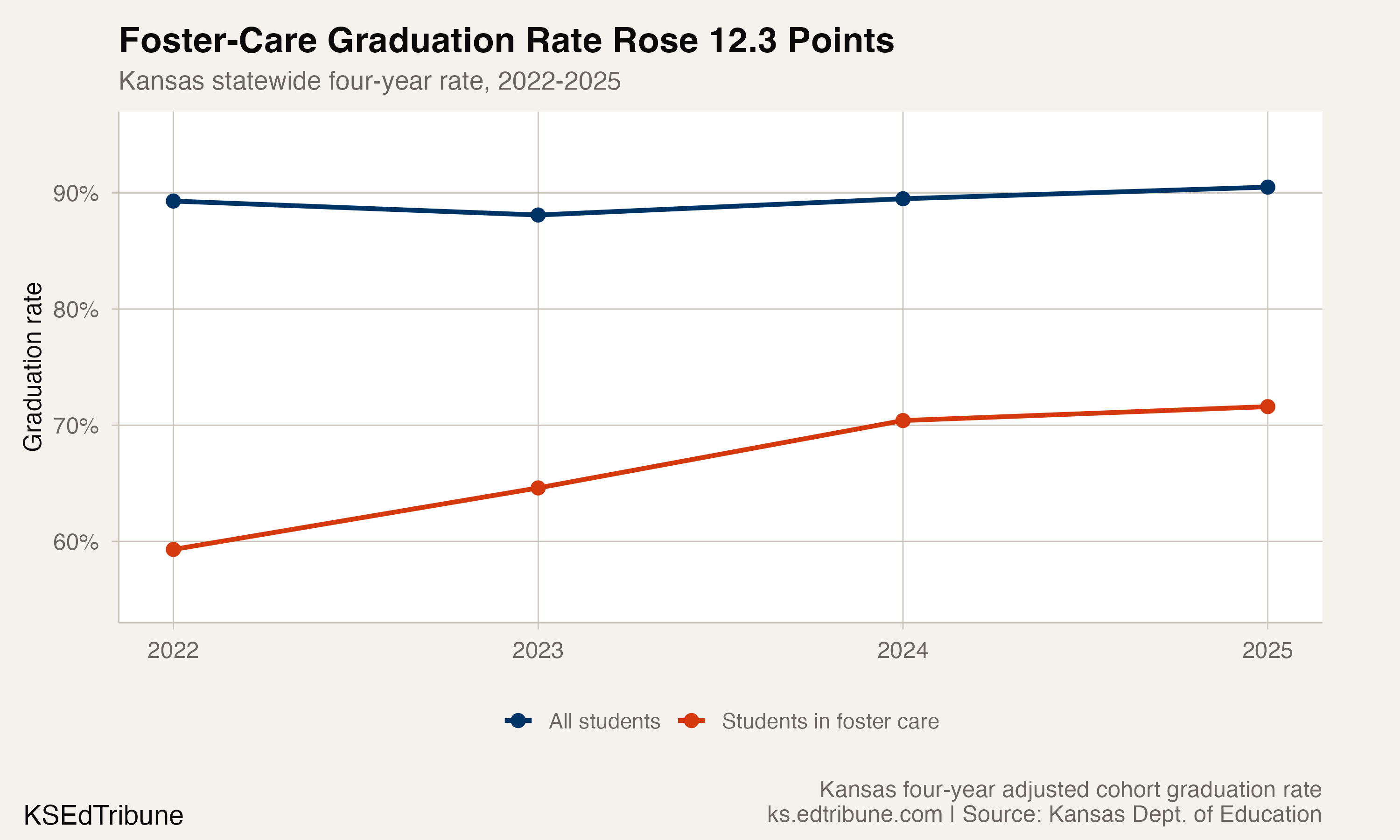
Kansas's four-year graduation rate for students in foster care rose from 59.3% in 2022 to 71.6% in 2025. The 12.3-point increase is important progress in the entire four-year period available for this subgroup.
It is also an unfinished story. The statewide rate for all students was 90.5% in 2025, leaving foster-care students 18.9 percentage points behind.
Four reported years, four distinct results
The foster-care rate increased to 64.6% in 2023, 70.4% in 2024 and 71.6% in 2025. Those annual gains were 5.3 points, 5.8 points and 1.2 points, respectively.
That sequence matters, but it does not establish a decade-long trend. Foster-care rows in the package begin in 2022, while the wider Kansas graduation file extends back to 2016.
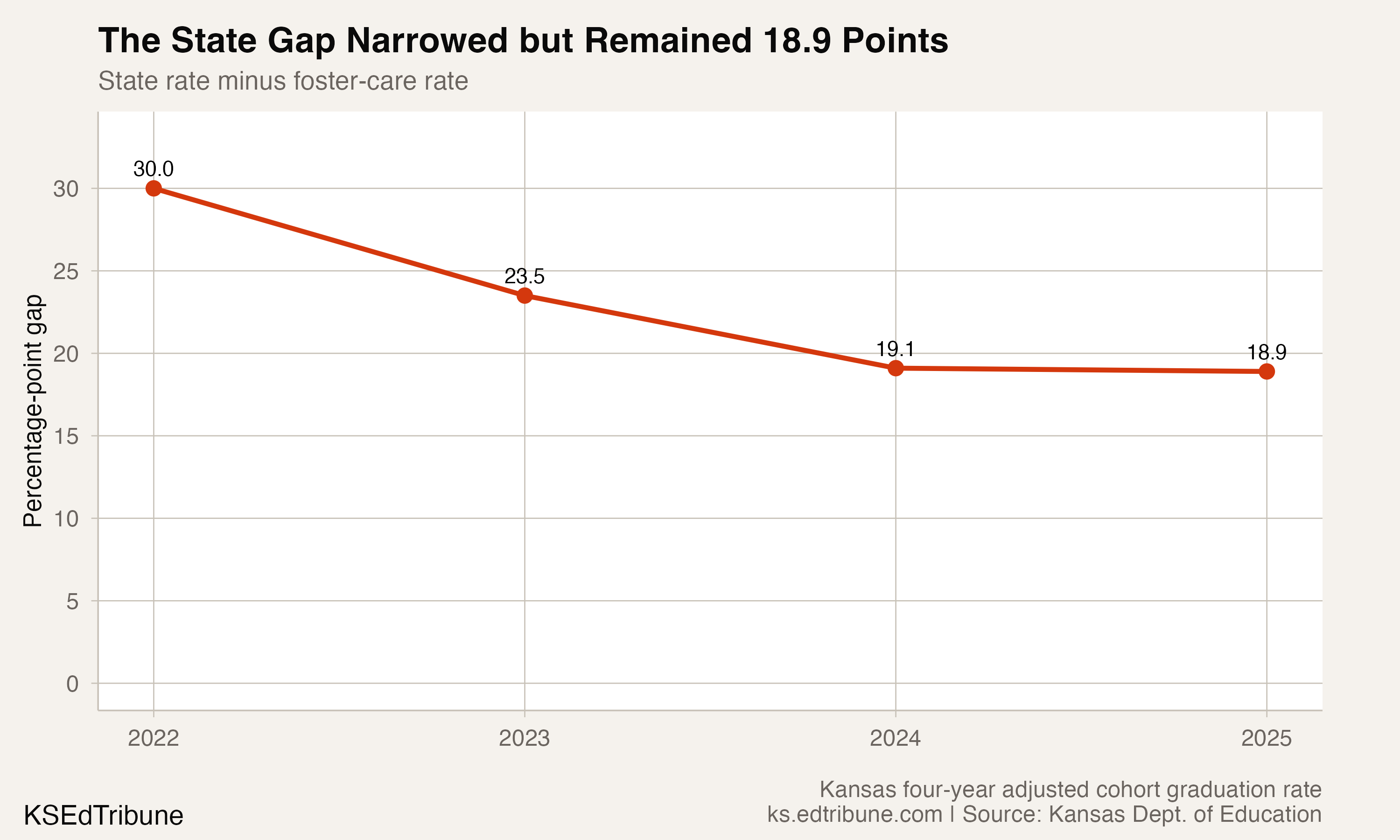
The state gap narrowed from 30.0 points in 2022 to 18.9 points in 2025, an 11.1-point reduction. Nearly all of that narrowing occurred before the latest year: the foster-care rate's 1.2-point 2025 increase was close to the state's 1.0-point increase.
Still the lowest reported subgroup rate
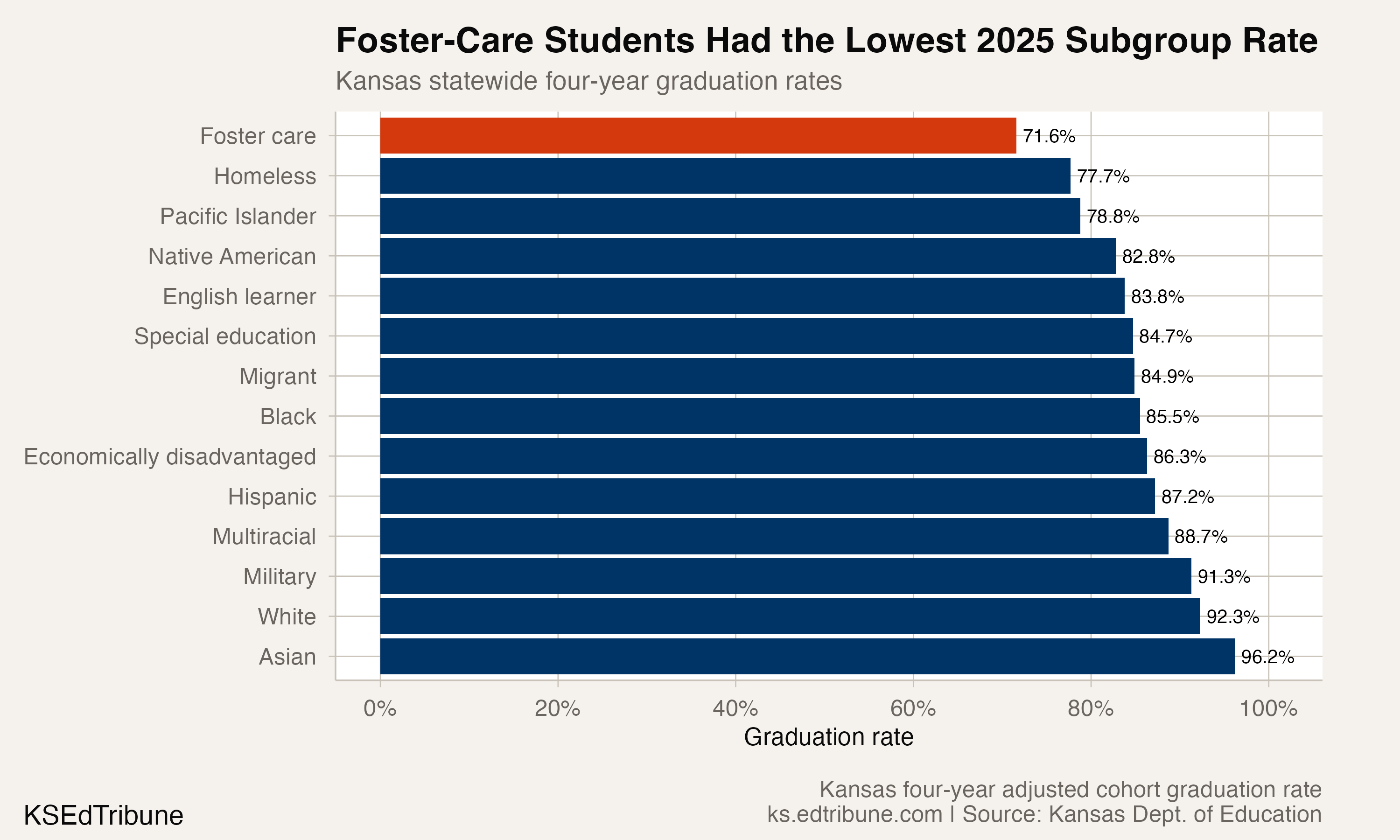
Among 14 student subgroups with statewide rates in 2025, foster-care students ranked lowest at 71.6%. Students experiencing homelessness were next at 77.7%, 6.1 points higher. Students in special education were at 84.7%.
These groups overlap, so the comparison is descriptive rather than a partition of Kansas students. The package also provides no usable cohort counts, which prevents a responsible estimate of how many students each rate represents.
The ranking and the trajectory answer different questions. The trajectory shows movement within the foster-care subgroup; the ranking shows its current position beside other reported groups. Neither comparison identifies which policies, student experiences or district practices produced the result.
Stability policy supplies context, not a causal answer
The Kansas State Department of Education's foster-care guidance emphasizes educational stability. It calls for keeping children in their school of origin when that is in their best interest and prompt enrollment in a new school when a move is necessary.
That is suggestive context for why continuity matters. It does not show what caused the 2022-2025 rate change. Placement changes, attendance, credit accumulation, cohort composition and local support could all be competing explanations, but the statewide aggregate file cannot isolate their effects.
The measurable conclusion is narrower: Kansas posted substantial improvement in the four years it reported this subgroup, yet foster-care students remained the state's lowest-rate reported subgroup and 18.9 points behind all students in 2025.
Detailed code that reproduces the analysis and figures in this article is available exclusively to EdTribune subscribers.
Discussion
Sign in to join the discussion.
Loading comments...